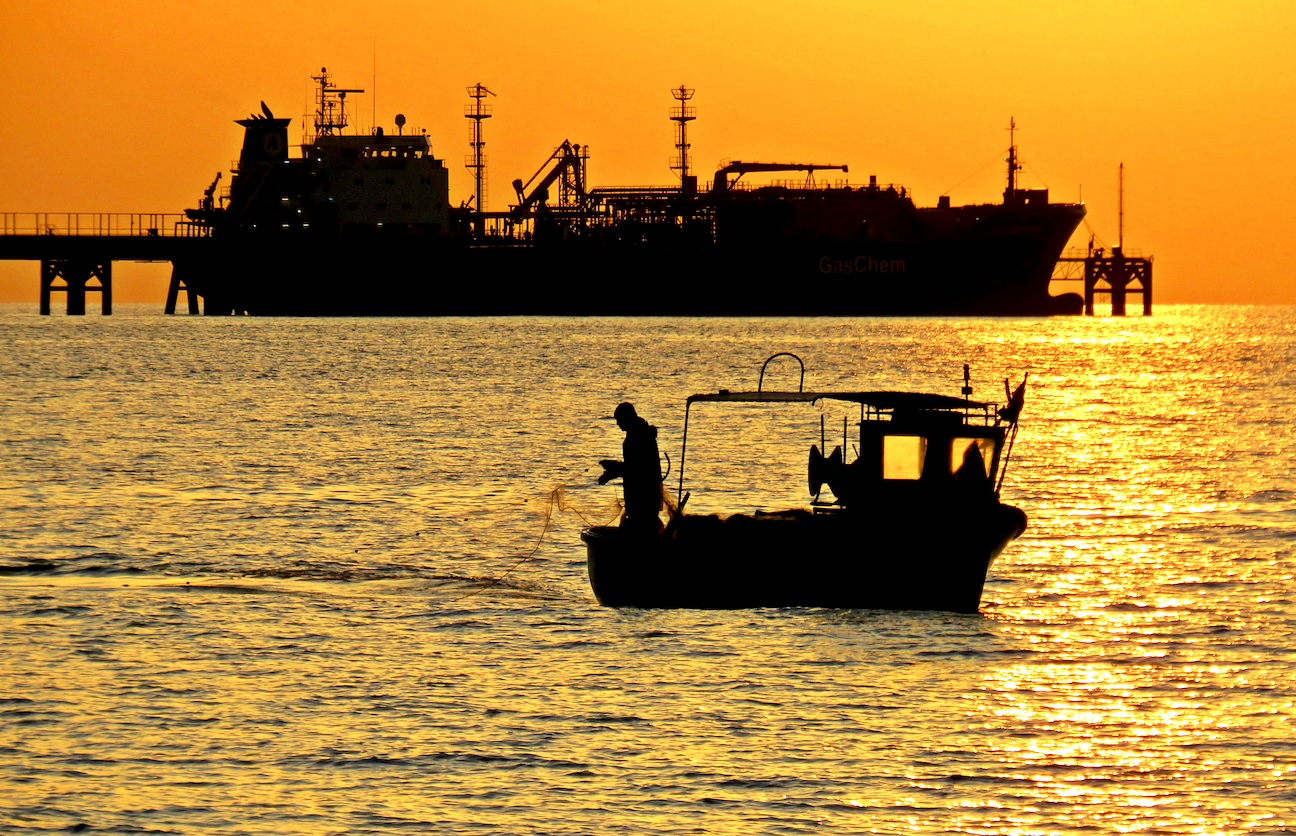
A Russian “shadow fleet” tanker sanctioned by the UK, EU and U.S. continued transporting oil in late 2025, underscoring what an investigation by Follow the Money describes as the limited impact Western measures have had on the cash flow Moscow earns from crude exports.
The Celt, a 244-meter-long oil tanker, sailed in October 2025 through the Baltic Sea, the North Sea and the Mediterranean, before reaching the east coast of Malaysia about a month later, an area the news agency calls a notorious hotspot for ship-to-ship transfers used to obscure a cargo’s origin.
The report, which draws on five years of data on 636 sanctioned tankers and interviews with sanctions and maritime experts, outlines the hurdles nations face when attempting to crack down on Russia’s flag-swapping, name-changing “shadow fleet” of oil tankers used to evade Western sanctions.
“The moment you sanction a vessel, another one is then likely to join the shadow fleet,” Elisabeth Braw, a senior fellow at the Atlantic Council, told FTM, pointing to ship owners in Western countries willing to sell vessels without scrutinizing buyers.
After Russia’s full-scale invasion of Ukraine in February 2022, Western governments sought to reduce Moscow’s energy income with a $60-per-barrel price cap on Russian oil and an end to EU and U.S. imports of seaborne Russian crude, introduced in December 2022.
Maria Shagina, a sanctions expert at the International Institute for Strategic Studies in London, told FTM the cap was “a trade-off by design,” intended to reduce revenues while allowing oil shipments to continue to global markets to prevent price spikes. Braw described the cap as an “obvious and elegant solution,” premised on the expectation that buyers would not purchase Russian oil above the limit.
But Moscow has since undermined that logic, according to the report. Through shell-company networks and willing intermediaries, it began buying up older tankers to assemble the shadow fleet and keep exports moving, while making enforcement harder and slower.
According to FTM’s timeline, the U.S. first blacklisted two tankers in October 2023. The EU sanctioned 27 tankers in June 2024, after protracted internal debate over legal justification and potential impacts on Europe’s shipping sector. The “big push” came in early 2025, when the outgoing Biden administration sanctioned 183 tankers, followed by further steps from the EU and the UK.
Vessel operators responded by rebranding ships, switching flags to jurisdictions with no apparent Russian link, and turning to more dubious registry practices when traditional “flags of convenience” became harder to obtain, Follow the Money reported.
Facing Western pressure, flag states such as Panama, the Marshall Islands and Liberia agreed to stop registering shadow fleet tankers, but fake registries have since appeared, claiming to offer flags from several African countries, including Benin, Malawi and Comoros, FTM said. Tankers have also increasingly spoofed Automatic Identification System (AIS) data to hide their locations.
More recently, drones have been spotted near critical infrastructure, and security services believe shadow fleet tankers have been used to launch some of them, the outlet reported.
After lingering in waters east of Malaysia, the Celt’s signal vanished on November 26, and the tanker disappeared from tracking maps. Based on FTM’s analysis analysis, a ship-to-ship transfer likely occurred, but cloud cover made satellite verification impossible.
The Celt reappeared the next day and sailed back toward the Indian Ocean without calling at any port to discharge cargo, according to the report. The oil is now likely headed to a refinery in northern China, described by FTM as the prime market for shadow-fleet crude.
Read more at Follow the Money