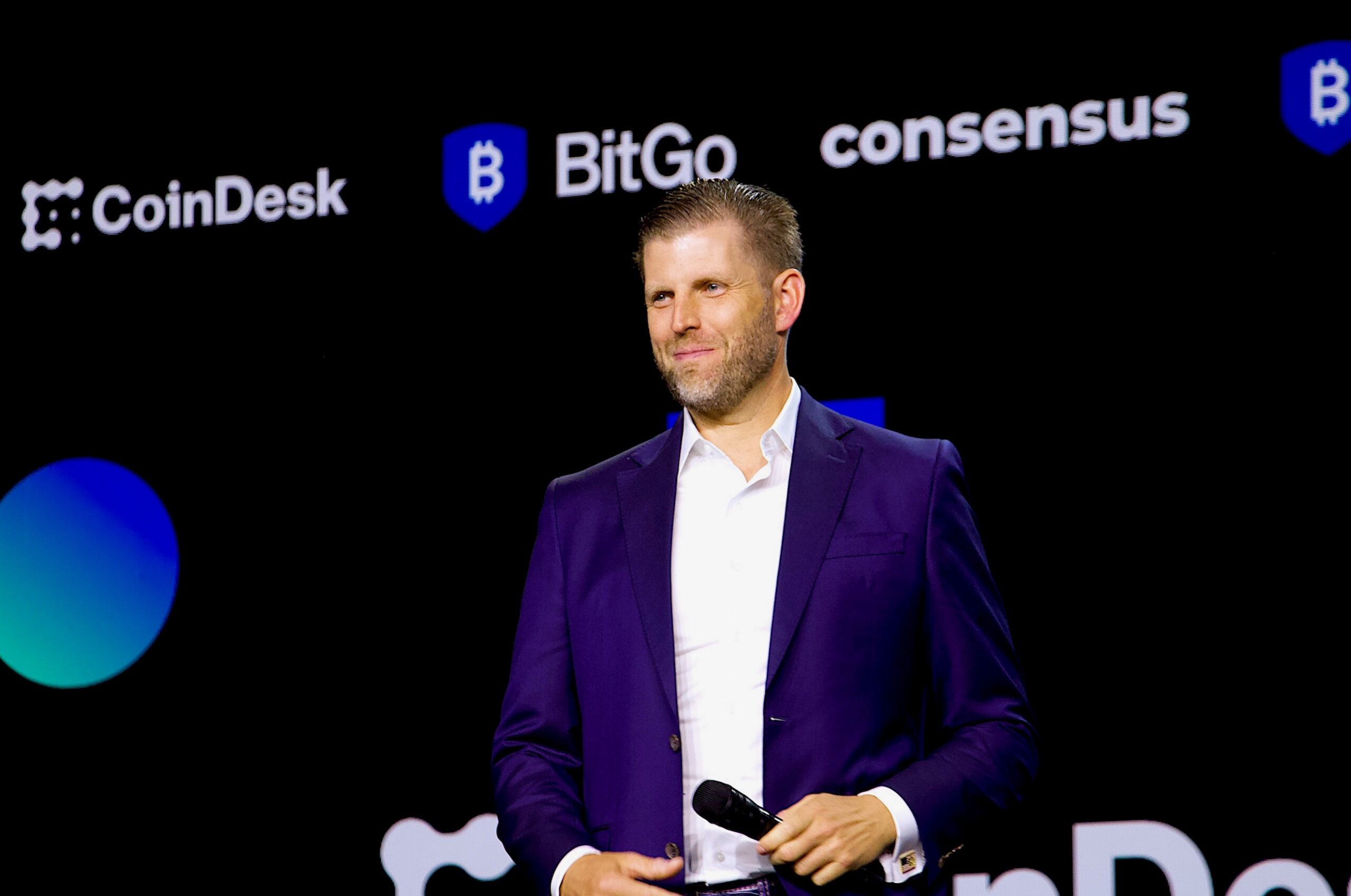
Eric and Donald Trump Jr. have turned a family-branded cryptocurrency venture into a cash machine that eclipses the Trump Organization’s traditional businesses, according to a Reuters investigation that traces opaque token purchases by overseas investors and a wave of U.S. policy shifts friendly to digital assets.
The brothers’ project, World Liberty Financial (WLFI), has not yet launched the peer-to-peer finance platform it promised on debut in September 2024. Even so, token sales and a Trump-themed meme coin have delivered an estimated $802 million of the Trump Organization’s $864 million income in the first half of 2025—a 17-fold jump from a year earlier, the news agency reported.
A centerpiece of the money-raising was a June 26 commitment by an Abu Dhabi-linked entity, Aqua1 Foundation, to buy $100 million of WLFI “governance tokens.” Acqua1 is linked to Guren “Bobby” Zhou, a Chinese businessman who met Eric Trump in Dubai in May and is under investigation for money laundering in Britain, according to the UK’s National Crime Agency and a court document cited by Reuters.
In addition to the ongoing investigation of Zhou for money laundering stemming from his 2021 arrest in the UK, the Chinese national and a family member have been found by Chinese courts to have failed to repay loans totaling in the millions of dollars, the news agency said.
A review of blockchain data with analytics firm Nansen found that foreign wallets dominate the largest holdings of WLFI tokens.
Among named buyers is Justin Sun, the Hong Kong-based crypto entrepreneur who was charged with fraud in 2023 by the U.S. Securities and Exchange Commission. The agency accused Sun of selling unregistered crypto securities and hiding payments to celebrities to promote his products.
The commission paused the case in February, weeks after Sun announced he had increased his investment into World Liberty tokens to $75 million. Sun’s purchases would have sent some $56 million to the Trumps under World Liberty’s cash distribution agreement, according to Reuters.
Questions of ethics violations have also extended to President Trump’s decision to pardon the founder of cryptocurrency exchange Binance and the willingness of compliance-troubled to crypto firms to expand their U.S. footprint.
In April, Donald Trump Jr. attended an event in Sofia, Bulgaria sponsored by Nexo, a crypto firm based in the Cayman Islands that exited U.S. business following a $45 million fine by the SEC, which accused the company of offering an unregistered securities product.
Antoni Trenchev, Nexo’s co-founder and a former member of the Bulgarian National Assembly, joined Trump Jr. on stage at the conference. During the event, Trenchev also announced that Nexo would resume operations in the United States, a decision the company subsequently attributed to the shifting regulatory environment under the Trump administration, Reuters said.
Read more at Reuters